
MailHub – My Way
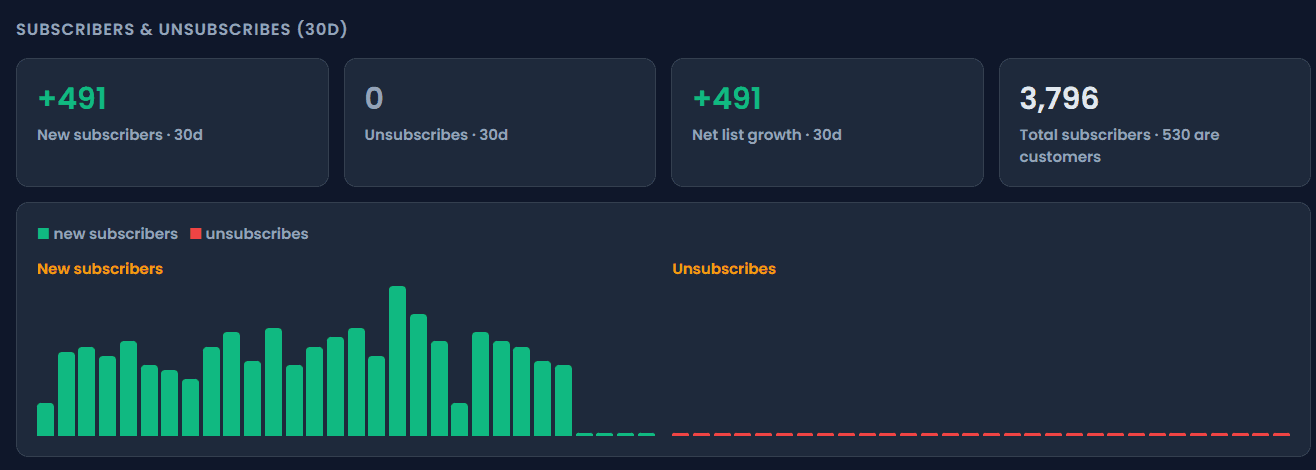
After looking at our growing list of email subscribers—now over 3,000 strong—we realized our Mailchimp bill was growing right along with it.
So, we decided to build our own solution using the Brevo API as the backbone.
Why?
Simple. It's cheaper, and we can customize it around our products, customers, and business goals in ways that no third-party platform can. Not because they lack the capability, but because nobody knows your business better than you do.
MailHub was built to segment our customers, subscribers, and website visitors in ways that allow us to target based on purchases, browsing behavior, interests, new arrivals, and current promotions. We built filters that allow us to create audiences based on any attributes we discover or decide are important.
We can target our entire audience—which we will rarely do—or create highly focused campaigns around things like color preferences, frame styles, price points, shopping habits, and more.

Principle #1: Be Helpful, Not Intrusive
The first principle behind MailHub is simple: be helpful, not intrusive.
We limit how often an email address can receive communications based on previous sends and a cooling-off period that we define. If a customer engages with our emails, that data helps us determine when it makes sense to communicate again.
The goal isn't to send more emails. The goal is to send better emails.
Principle #2: Value the Relationship
We value the ability to reach our customers through email, text, and other channels.
Because we value that relationship, every communication should return value to the customer. Sometimes that's exceptional customer service. Sometimes it's early access to promotions, exclusive offers, or information that helps them make a better decision.
Customers give us permission to enter their inbox. We should treat that privilege with respect, and from the numbers below its working.
Principle #3: Read the Room
Our customers change. Their interests change. Their shopping habits change.
Our systems should change too.
Every data point is an opportunity to learn, improve, adapt, and serve our customers better. MailHub is designed to evolve as our business evolves.
We also added several custom features that take the platform to another level, but some things are staying in-house as a competitive advantage.
Website Modernization
This week we migrated one of our websites from Elementor to Blocksy.
The goal was simple: improve site speed, modernize the platform, and create a stronger foundation for automation.
The results were immediate.
Site performance increased by roughly 250%, and our mobile PageSpeed score improved from 33 to 73. Is it perfect? Not even close. But it's a significant step in the right direction, and we'll continue optimizing from here.
SecOps
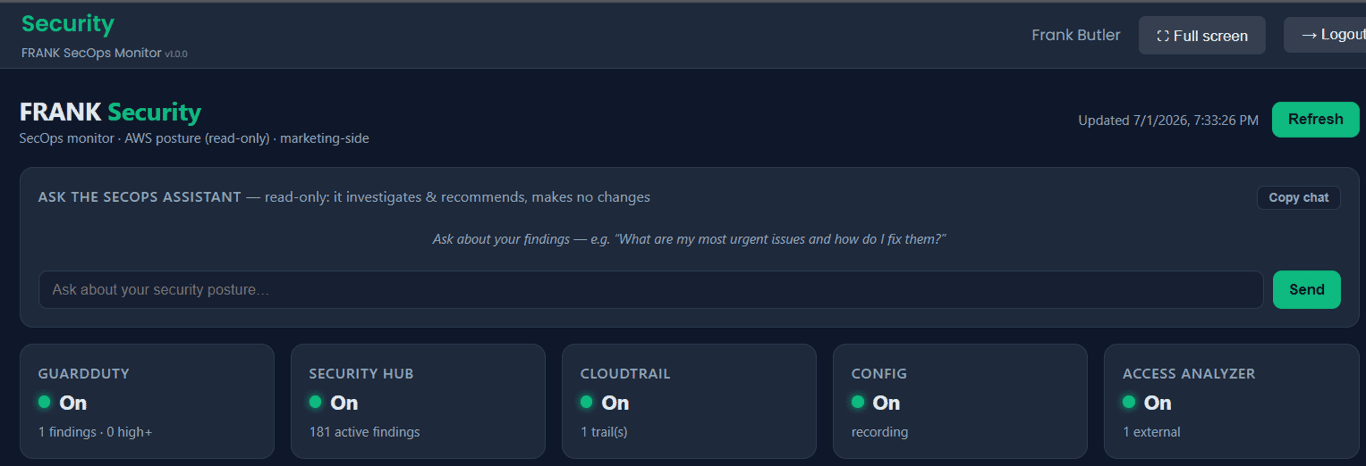
We added a new SecOps module to FRANK that now performs daily scans across all of our digital properties.
The module includes a dashboard that displays scan results, identifies issues, provides research and remediation options.
As our businesses grow, security can no longer be an afterthought. It has to become part of the daily operating rhythm.
Shipping Without Limits
We currently ship around 300 packages per month and had been relying on ShipStation as our primary shipping platform.
Our challenge wasn't functionality—it was automation.
We needed an API-driven solution that could support the unique workflows across multiple businesses. I'm sure ShipStation has a very nice API, but access comes at a cost.
So...
We landed on EasyPost.
And honestly, the API is fantastic.
We built a custom shipping interface around the way we actually work. Inbound shipments are tracked based on customer interaction with shipping labels. Outbound shipments are tracked based on carrier activity.
Need signature confirmation over a certain dollar amount? Done.
Returns that automatically deduct shipping costs? Done.
Defective product RMA workflows that automatically trigger replacement shipments? Done.
Instead of forcing our business to work around a platform, we built a platform around our business.
One Week. One Guy. Multiple Businesses.
This week reminded me of something I've believed for a long time.
AI isn't replacing people.
It's allowing people to accomplish things that would have required entire teams just a few years ago.
Every project above started with a problem. Every solution started with an idea. AI simply helped accelerate the journey from idea to execution.
And next week, we'll build something else.
About the Author

Related Articles

What we built this week - with Ai p4
Is your business being served by Ai agents?

Can ChatGPT Find Your Business? We Built a Free Tool to Find Out.
We built the Frank Business Diagnostic, a free scanner that looks at your business from the perspective of AI and search technology and identifies areas that may be limiting your visibility.
